Your travel expert
Xavier Amigo
Responsible for naturalist, botanical and ornithological travel. Responsible of fixing and professional contact.

 https://nature-experience-group.com/wp-content/uploads/2025/06/Perou-Amazonas-Coq-de-roche-peruvien-Rupicola-peruvianus-Andean-Cock-of-the-rock-DB-027-1240x700.jpg
Embark on a captivating 14-day birdwatching adventure through southern Peru with Birding Experience. This meticulously crafted tour immerses you in diverse ecosystems, from the Andean highlands to the famous Manu Road, offering unparalleled opportunities to observe a vast array of bird species.
Your journey begins in Lima, where you'll explore the nutrient-rich coastal waters teeming with seabirds such as boobies, cormorants, and penguins. A short flight takes you to Cusco, the heart of the Inca Empire, where you'll traverse high-altitude grasslands in search of endemic species like the Bearded Mountaineer and Creamy-crested Spinetail.
Continuing your descent, you'll reach the cloud forests of the eastern Andes, home to the Andean Cock-of-the-Rock and other regional specialties. Descending the iconic Manu Road to the lowlands of Pilcopata, you'll be able to observe a wealth of range-restricted Peruvian species in a mixture of unique ecosystems.
The tour includes visits to the Sacred Valley's archaeological sites and the iconic Machu Picchu. Throughout the journey, expert guides will enhance your experience, ensuring you witness the full spectrum of Peru's avian wonders.
This expedition is a dream come true for bird enthusiasts, offering a blend of natural beauty, cultural heritage, and exceptional wildlife encounters.
 Birdwatching tours
 Photo tours
This trip was originally published on Birding Experience,
find out more on its specialised website

Your travel expert
Xavier Amigo
Responsible for naturalist, botanical and ornithological travel. Responsible of fixing and professional contact.
We will transfer to your hotel after you arrive at Lima International Airport. Your guide will give you a short briefing on the upcoming trip. If the flight schedule allows, we will visit the Pantanos de Villa coastal reserve south of the city. These coastal marshes are home to many resident species and can be very interesting staging areas for migratory birds at certain times of year. We’ll return to the hotel for some rest at the end of the day. For those who wish, visiting the colonial districts of the Peruvian capital at your own pace is possible.
Dinner and overnight stay in a charming hotel in Lima in the peaceful Miraflores district.
Welcome assistance and local transfer, dinner, accommodation
Great Grebe, White-cheeked Pintail, Cinnamon Teal, Peruvian Thicknee, Plumbeous Rail, Belcher's Gull, Kelp Gull, Gray-headed Gull, Franklin's Gull, Black Skimmer, Yellowish Pipit, Peruvian Meadowlark, Yellow-hooded Blackbird, Many-colored Rush Tyrant, Wren-like Rushbird, Grassland Yellowfinch
This morning, we will fly to the ancient Inca capital, Cuzco. As soon as we arrive, we will board our private transport and head south of the city to the high-altitude lake of Huarcapay. Here, an array of localized species awaits us. We will also look for some species of Furnarids that are typical of these xerophytic Andean environments. Our main objective will be to observe the rare Bearded Mountaineer hummingbird, which feeds on tobacco flowers. We’ll return to Cuzco in the early afternoon for a peaceful tour of the city, where we’ll discover the highlights of the colonial and pre-Hispanic architecture and history of the Inca capital.
Dinner and overnight stay in a charming hotel.
Private transport, English-speaking specialist guide, all meals, accommodation
White-tufted Grebe, Silvery Grebe, Andean Ruddy Duck, Cinnamon Teal, Puna Teal, Andean Gull, Giant Hummingbird, Bearded Mountaineer, Andean Negrito, Yellow-winged Blackbird, Rusty-fronted Canastero, Streak-fronted Thornbird, Golden-billed Saltator, Line-fronted Canastero, Scribble-tailed Canastero, Puna Thistletail, Diademed Tapaculo, Rufous-bellied Bush-Tyrant, Black-throated Flowerpiercer, Scarlet-bellied Mountain Tanager, White-browed Conebill, Three-striped Hemispingus, Drab Hemispingus
Today will essentially be a day of relaxation as we visit the historical and archaeological highlights of one of South America’s most emblematic Inca areas. We will explore different archaeological sites in the "Sacred Valley" and the small Inca village of Ollantaytambo. We will stroll through the traditional Sunday market of the colonial village of Pisac, between Andean tubers, wool handicrafts, and traditional clothes. We will also have the opportunity to visit part of the archaeological site of Pisac, which overlooks the city.
We’ll enjoy lunch in a local country restaurant in or around Urubamba before departing for the less-touristic village of Chinchero. We will then stroll through the village streets to discover some of the remains of the Incan past of this mystical, high-altitude place. Afterward, we’ll return to Ollantaytambo. There are two options for the late afternoon. Those who wish can visit the Inca site of Ollantaytambo at their own pace. The rest of the group can go for a short bird walk around the village in search of some range-restricted species.
Dinner and overnight stay in a charming hotel in Ollantaytambo.
Private transport, English-speaking specialist guide, all meals, accommodation
White-tufted Sunbeam, Creamy-crested Spinetail, Rusty-fronted Canastero, Black-throated Flowerpiercer, Junin Canastero, Bearded Mountaineer, Tit-like Dacnis, Chestnut-breasted Mountain-Finch.
Early this morning, we will head to the highlands and the Abra Malaga pass. This famous birding site is home to several special ecosystems. We will look for several endemic hummingbirds in the mixed high-Andean forests and flower gardens on the drive up. At the pass, we will explore extremely specific environments at an altitude of more than 4000 meters: scrub, herbaceous areas, Polylepis woods, and rocky peat bogs. Our principal target here is the endemic and critically endangered Royal Cinclodes.
After surveying these high-altitude ecosystems, we will descend along the eastern side of the pass to subtropical and cloud forest areas. We will pay particular attention to the large bamboo patches (Chusquea) that line the road. At the end of the day, we will return to Ollantaytambo, where we will take the last train to Aguas Calientes, the village at the foot of Machu Picchu.
Dinner and overnight stay in a charming hotel.
Private transport, English-speaking specialist guide, all meals, accommodation
Andean Goose, White-winged Diuca-Finch, Giant Conebill, Tit-like Dacnis, Line-fronted Canastero, Puna Thistletail, Streak-throated Canastero, Tawny tit-Spinetail, White-browed Tit-Spinetail, Stripe-headed Antpitta, Puna Tapaculo, Royal Cinclodes, Unstreaked Tit-Tyrant, Inca Wren, White-browed Conebill, Slaty Tanager, Three-striped Hemispingus, Parodi's Hemispingus, Scaled Metaltail, Marcapata Spinetail, Rufous Antpitta, Diademed Tapaculo, Golden-collared Tanager, Rufous-bellied Bush-Tyrant
At dawn (5:30 am), we set out for one of the world’s most iconic sites: Machu Picchu, the legendary Incan citadel rediscovered in 1911 by explorer Hiram Bingham. As morning mist lifts from the surrounding peaks, we’ll explore its most remarkable structures—the Plaza de Armas, the Circular Tower, the royal dwellings, and the Temple of the Three Windows—while reflecting on the mystery and grandeur of this ancient civilization. Between stone terraces and temples, we’ll keep our binoculars ready: the forests around the ruins harbor a wealth of birdlife, including Inca Wren, Mottle-cheeked Tyrannulet, Masked Fruiteater, Sclater’s Tyrannulet, and Variable Antshrike.
The quiet hours before the first tourist buses arrive from Cusco will allow us to enjoy both the ruins and the birding in relative peace. Later, we’ll descend towards Aguas Calientes, walking through lush high-altitude temperate forests alive with birdsong.
Dinner and overnight stay at the same hotel.
Private transport, English-speaking specialist guide, all meals, accommodation
Inca Wren, Mottle-cheeked Tyrannulet, Masked Fruiteater, Sclater's Tyrannulet, Variable Antshrike

This morning, we board the train to Ollantaytambo, where our private bus awaits to take us along the southern route of the eastern cordillera. The journey is as rewarding as the destination: we pass through sandy Andean valleys, shifting ecosystems, and striking highland scenery, with time for both birding and archaeological stops along the way. The drive is long, but the reward comes as we crest the Tres Cruces pass, where the sweeping panorama marks the official gateway to the world-renowned Manu Road. From here, we begin a gentle descent through elfin forests and lush temperate forests, alive with birdlife and boasting several highly localized endemic species that we’ll search for en route.
By late afternoon, we arrive at Wayqecha Lodge, perched at 3,000 meters in the heart of the upper Manu Road, where the cloud forest meets the grasslands. For those with energy left, optional night outings offer the chance to discover some of the region’s secretive nocturnal birds and mammals.
Dinner and overnight at Wayqecha Lodge.
Private transport, English-speaking specialist guide, entrance to the Wayqecha Reserve, all meals, accommodation
Chestnut-breasted Mountain-Finch, Andean Hillstar, Andean Flicker, Black-throated Flowerpiercer, Chuiguanco Thrush, Creamy-crested Spinetail, Scribble-tailed and Line-fronted Canasteros, Puna Wren, Puna and Diademed Tapaculo, Gray-breasted Mountain Toucan, White-browed Conebill, Collared Jay, Mountain Cacique, Swallow-tailed Nightjar

Today we dedicate the full day to one of the world’s most famous birding routes: the descent from the temperate cloud forests of Wayqecha Lodge down into the lush subtropical forests that surround the legendary Cock-of-the-Rock Lodge. Traveling along this breathtaking altitudinal gradient, we’ll stop at classic spots such as the “tunnels”—famous for their mixed flocks and specialties—as well as anywhere the forest opens up with promising birding opportunities. Each bend of the Manu Road reveals a shifting community of birds: Mountain Tanagers, Hooded and Grass-green Tanagers, Barred Fruiteater, Versicolored Barbet, Golden-headed Quetzal, and Masked Trogon are among the many highlights. Lower down, we may encounter motmots, manakins, toucanets, and trogons, completing the spectrum of this remarkable gradient.
By mid-afternoon, we reach the Cock-of-the-Rock Lodge, tucked deep in the forest. The day winds down perfectly with some relaxed “veranda birding,” where multicolored tanagers, hummingbirds, and woodcreepers often come within just a few meters.
Dinner and overnight at the Cock-of-the-Rock Lodge.
Private transport, English-speaking specialist guide, entrance to the Cock-of-the-rock Reserve, all meals, accommodation
Hooded Tinamou, Solitary Eagle, Lyre-tailed Nightjar, Amethyst-throated Sunangel, Rufous-capped Thornbill, Blue-banded Toucanet, Marcapata Spinetail, Rufous-backed Treehunter, Red-and-white Antpitta, White-throated Antpitta, Band-tailed Fruiteater, Inca Flycatcher, Fulvous Wren, White-eared Solitaire, Black-faced Brushfinch

At dawn, we’ll witness one of the Andes’ most unforgettable displays—the lekking ritual of the Andean Cock-of-the-rock. Watching the brilliant orange males of this eastern subspecies call and posture in the half-light is a true highlight of any birding journey. After savoring this spectacle, we’ll continue along the lodge’s forest trails, searching for other specialties such as Peruvian Piedtail, Versicolored Barbet, Crested Quetzal, and Slaty Gnateater.
Following a hearty lunch, the veranda offers the perfect place to relax while dozens of hummingbirds, from Wire-crested Thorntail to Geoffroy's Daggerbill, dart among the feeders. Later, we’ll return to the main trail for more birding until dusk. After dinner, a guided night walk will open a new world, as we look for nocturnal birds like Band-bellied Owl or Rufescent Screech-Owl, along with mammals and reptiles that thrive in the subtropical darkness.
Dinner and overnight at the same lodge.
Private transport, English-speaking specialist guide, all meals, accommodation.
Black Tinamou, Brown Tinamou, Torrent Duck, Rufescent Screech-Owl, Black-Streaked Puffbird, Lanceolated Monklet, Versicolored Barbet, Ash-browed Spinetail, Scaled Antpitta, Crested Quetzal, Andean Cock-of-the-Rock, Yungas Manakin, Cerulean-capped Manakin, Hazel-fronted Pygmy-Tyrant, Moustached Wren, Chestnut-breasted Wren, Slaty Tanager, Peruvian Piedtail, Versicolored Barbet, Crested Quetzal, Slaty Gnateater

We'll spend the morning birding around the lodge and along the road, targeting any species we may still need, before taking a short transfer to our next accommodation: the scientific station of Villa Carmen (500 masl), near Pillcopata. Naturally, we will make birding stops along the lower reaches of the road before arriving at Villa Carmen: as we continue dropping in altitude and reaching new ecosystems, the avifauna will continue to change, and we'll start to add some new lowland species to our lists.
After settling into this new accommodation and receiving a short briefing on the project, we will start exploring the station’s surroundings. The hummingbird and fruit feeders in front of the restaurant should give us some new trip birds, and a short loop around the lake is good for mixed flocks of tanagers, barbets, and flycatchers.
Dinner and overnight stay in a Biological Station.
Private transport, English-speaking specialist guide, entrance to the Villa del Carmen reserve, all meals, accommodation.
Horned Screamer, White-cheeked Tody-Tyrant, Flammulated Tody-Tyrant, Black-backed Tody-Flycatcher, Large-headed Flatbill, Dusky-cheeked Foliage-gleaner, Rufous-headed Woodpecker, Manu Antbird, Goeldi’s Antbird, Red-billed Scythebill, Bamboo Antshrike, White-lined Antbird, Ornate Antwren, and Dot-winged Antwren, Scarlet-hooded Barbet

The unique bamboo-dominated ecosystems of the Manu bio-region have fostered a remarkable evolutionary niche, home to numerous endemics found nowhere else. This morning we’ll explore these specialized habitats in search of bamboo specialists such as Bamboo Antshrike, White-cheeked Tody-Flycatcher, and Manu Antbird.
Later, we’ll continue into the lush Piñipiñi River Valley, where diverse vegetation supports a wealth of understory species, particularly antbirds, antthrushes, and foliage-gleaners moving through the dense forest shadows. As the day fades, our adventure continues after dark: a night walk here can be especially rewarding, offering chances to encounter reclusive nocturnal wildlife such as Night Monkeys, Tayra, Kinkajou, and Opossums, as well as owls and other night birds that haunt the bamboo thickets.
Dinner and overnight at the same charming lodge.
Private transport, English-speaking specialist guide, all meals, accommodation.
Military, Blue-headed and Chestnut-fronted Macaws, White-cheeked Tody-Flycatcher, Manu, Striated, Goeldi's, and White-lined Antbirds, Ihering's Antwren, Bamboo Antshrike, Large-headed and Dusky-tailed Flatbills, Flammulated Tody-Tyrant, Rufous-capped Nunlet, Brown-rumped and Dusky-cheeked Foliage-gleaners, Red-billed Scythebill, Dot-winged Antwren, Ornate Antwren, Rufous-breasted Piculet, Rufous-headed Woodpecker, Peruvian Recurvebill, Rusty-belted Tapaculo, Amazonian Antpitta, Red-necked Woodpecker, Scarlet-hooded Barbet, Fine-barred Piculet
Depending on our target species, we can either spend some more time this morning birding around Villa Carmen, or depart after breakfast back up the Manu Road towards Wayqecha, making birding stops along the way to target specific species.
We will take a box lunch to allow us to spend more time in the field, before arriving at Wayqecha in the late afternoon, where we can settle in and do some gentle birding around the lodge before dusk.
Dinner and overnight stay in a superior lodge.
Private transport, English-speaking specialist guide, all meals, accommodation
Target birds for today include species from Villa Carmen and the higher stretches of the Manu Road, depending on where our targets are.
Today will be fully dedicated to exploring the heart of Wayqecha Reserve, a sanctuary of pristine temperate forest at the Andean cloud forest–puna transition. At dawn, we’ll visit a feeding area for the endemic Urubamba Antpitta, offering a rare chance to observe this elusive bird.
As the morning unfolds, we’ll wander the network of trails, scanning for dazzling mixed tanager flocks moving through the canopy and listening for the distinctive calls of Red-and-white and Leymebamba Antpittas. In the afternoon, we’ll bird along the reserve’s main road, where more open habitats allow for easier photography and a new blend of species.
After dinner, the forest comes alive again: we’ll set out on a night excursion in search of nocturnal treasures, with a special focus on the spectacular Swallow-tailed Nightjar, a regular highlight at this elevation.
Dinner and overnight at the same lodge.
Private transport, English-speaking specialist guide, all meals, accommodation
Golden-plumed Parakeet, Andean Parakeet, Yungas Pygmy Owl, White-throated Screech-Owl, Gould's Inca, Sword-billed Hummingbird, Violet-throated Startfrontlet, Scaled Metaltail, Long-tailed Sylph, Masked Trogon, Gray-breasted Mountain-Toucan, Red-and-white Antpitta, Urubamba Antpitta, Leymebamba Antpitta, Pearled Treerunner, Trilling Tapaculo, White-crowned Tapaculo, Barred Fruiteater, Chestnut-crested Cotinga, Barred Becard, White-eared Solitaire, White-collared Jay, Grass-green Tanager, Chestnut-bellied Mountain Tanager, Moustached Flowerpiercer
Before breakfast, we will take a moment in front of the lodge to enjoy the feeding area where jays, guans, toucans, caciques, and many other photogenic birds gather.
Then, we will have to leave behind the beautiful landscapes of the Manu road to reach the semi-arid vegetation of the Urubamba Valley and then the Inca capital. The journey will once again be punctuated with different stops, blending nature, history, and culture. We will also take the opportunity to look for any key species we may not yet have observed.
With our private transport, we will explore several Inca and pre-Inca archaeological sites of the “Sacred Valley” before arriving in Cusco at the end of the day. Depending on the arrival time in Cusco, we may take a moment to stroll through the cobbled streets and discover the incredible architecture of the capital of Tahuantinsuyu, the former Inca Empire.
Dinner on your own and overnight in a colonial hotel in the old town.
Private transport, English-speaking specialist guide, breakfast and lunch, accomodation
Early morning transfer to Cusco airport for our flight to continue our adventure—either to Lima for your international departure or to the airport for your extension. Transfer and lunch times will be arranged according to your flight schedule with your local guide.
You have the option to conclude your trip along the Pacific coast with our 3-day extension around Lima to observe a large number of coastal and marine species, or to cross the eastern Andes once again toward the lowlands of the Amazon to explore the lush Amazonian rainforests of Tambopata.
Private transport, English-speaking assistance, breakfast and lunch
14 Days Birdwatching Itinerary - Prices and dates of upcoming departures
| Prices and departure dates | 2 travellers | 4 travellers | 6 travellers | 8 travellers |
|---|---|---|---|---|
Prices 2026 | 6 290 USD | 4 430 USD | 3 740 USD | - |
Prices 2027 | 6 290 USD | 4 428 USD | 3 740 USD | - |
Prices 2028 | 6 730 USD | 4 738 USD | - | - |
Are you a group of travellers looking for a special price, a specific departure date, or would you like to change this itinerary?
Customise this trip Contact usIncluded
Not included
Payment and reservation terms
To book your tour, please confirm your agreement in writing to the local Ecuador Experience agent.
The agency declines all responsibility for the execution of the confirmed services in case of non-compliance with the above payment terms.
Important note
Itineraries may be subject to last minute changes due to natural disasters or changes in domestic legislation. The visitor must take into account and accept the possibility of last minute changes in the organisation of the trip. The operator therefore reserves the right to make any changes necessary to ensure the safety and integrity of the travellers and to comply with the laws in force. The hotels are given as an indication subject to availability at the time of booking the tour. In case of unavailability, a hotel of the same category will be proposed.
Formalities
Formalities: Passport valid 6 months after your return date. No visa is required at this time. Your health insurance (private or public) is mandatory to enter Ecuador.
Vaccinations: Although no vaccinations are compulsory, we advise you to consider vaccinations against tetanus, yellow fever and hepatitis A and B as essential.
We recommend that you consult your doctor before departure and that you take out insurance to cover medical expenses and repatriation.
Concerning parasitic diseases transmitted by mosquito bites (such as malaria, dengue fever, Chikungunya), please note that Cusco and the centre of the country are not affected. Furthermore, the majority of the country's risk areas are not in the areas we visit on our tours.
Your guide for this trip
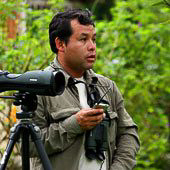
Percy Avendaño


With more than 15 years of experience as a bird guide, Percy knows perfectly his country, which he explored from north to south, from Chiclayo to Manu, but also in Bolivia. The vocalizations of the avian species of these two countries have no secret for him. Moreover he knows extremely well the modern and past history of the region which he also explains with enthusiasm and passion.
Characteristics of the trip
Travel theme |
Ornithology, photography and culture |
|---|---|
Accompaniment |
Bilingual guide |
Group |
From 4 to 6 people |
Arrival city |
Lima |
Departure city |
Lima |
Food |
Local and internationall meals |
Accommodation |
Charming Hotels, Lodges and Hacienda |
Transport |
Private |
Physical condition |
moderate (some walks at altitude, although slow, can be tiring) |
Best season |
Any time of the year. But the best month is the during the dry season (From March to November) - The rest of the year some lowland lodges can flood and high mountain roads can become treacherous |
Other trips that may interest you
Birds from The End of the World

This birding and nature tour, designed for both observers and photographers, will allow us to explore the most emblematic landscapes of Patagonia.


Inírida
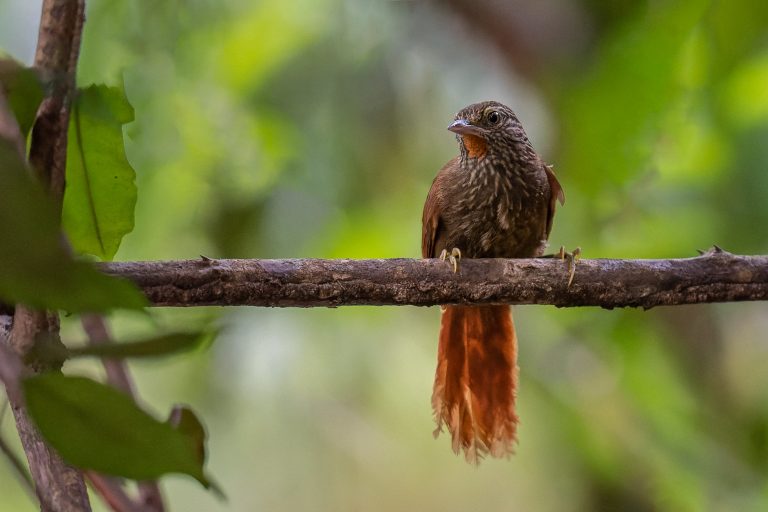
Considered one of the ultimate birdwatching destinations in Colombia, Inírida is strategically located at the confluence of three of the world's richest biodiversity regions: the Orinoco region, the Amazon, and the Guiana Shield. This mosaic of ecosystems is key to understanding the immense avian diversity in Inírida, where white-sand forest specialists are the undisputed stars.
Pantanal and Atlantic Forest

Embark on a world-class birding and wildlife adventure through Brazil's Pantanal and Atlantic Forest, two of the world's most biodiverse ecosystems. Enjoy stunning views of iconic species like Hyacinth Macaw, Saffron Toucanet, and Toco Toucan. Experience close encounters with wildlife such as jaguars, capybaras, and giant anteaters. This 15-day tour is ideal for birders, photographers, and nature enthusiasts seeking an immersive, expert-guided tour to Brazil.

Receive our brochure

Customize your trip


